by Barry Kooser
There comes a stage in every artist’s life when creation alone is no longer enough. Not because the work has lost its magic, but because survival, sustainability, and growth start knocking louder than inspiration. That moment when you “take a left turn at Albuquerque” (to paraphrase Bugs Bunny), you decide to steer your creative vision toward a new direction – artistry collides head-on with entrepreneurialism.
An entrepreneur is an innovator who creates, launches, and manages a new endeavor, business or vocation, takes on financial risks to bring new products or services to market, and is driven by identifying opportunities and seeking profit and impact. They possess initiative and self-reliance as key drivers in an economy by filling market gaps and creating influence.
Being an entrepreneurial artist isn’t about putting creativity on the back-burner; it’s about learning to foster, protect and coexist with it.
The Shift: From Follower to Inventor
As young artists, we’re conditioned to follow the practical norms: fundamentals improvement, networking, portfolio growth and more. All of these approaches are built to gain traction and eyeballs in a chosen industry: illustration, animation & film, video games, design, children’s books, gallery representation etc. Entrepreneurialism asks for something more: structure, strategy, and patience as an independent creator and inventor. However, this transition can feel uncomfortable, even sacrilegious at first. Suddenly you’re not just asking: What do I want to create? but, Who is this for? How does it exist in the world? How do I sustain this long-term?
That friction—between freedom and responsibility—is the defining feature of the artist-entrepreneur.
How do we manage this?
The Do’s:
Treat your art like a living entity.
Your work needs care, boundaries, and nourishment. This means pricing work appropriately, saying no to misaligned opportunities, and building processes that allow your creativity to breathe rather than burn out.
Learn the language of business – without limiting your creative voice.
Marketing, branding, and finances aren’t enemies of art; they’re tools for growth. When understood, they give your work reach, longevity and a voice. When ignored, they quietly hinder you by the self-limiting thoughts of, “I’m waiting to get discovered” or “I’m hoping to meet the right people.”
The business side doesn’t have to be complex, just focused.
Learning – expect growth to feel awkward at times.
New directions come with uncertainty and sometimes feeling confused and defeated. You may question yourself while others question you. You’ll outgrow old identities and practices. This discomfort & friction is often a sign you’re expanding & learning, not failing.
Charting new ground and most importantly, the knowledge gained in the journey, is vital to your growth. You’re never going to have all the answers but the knowledge of “what doesn’t work” is just as important as “what does work.”
Learn from the snafus.
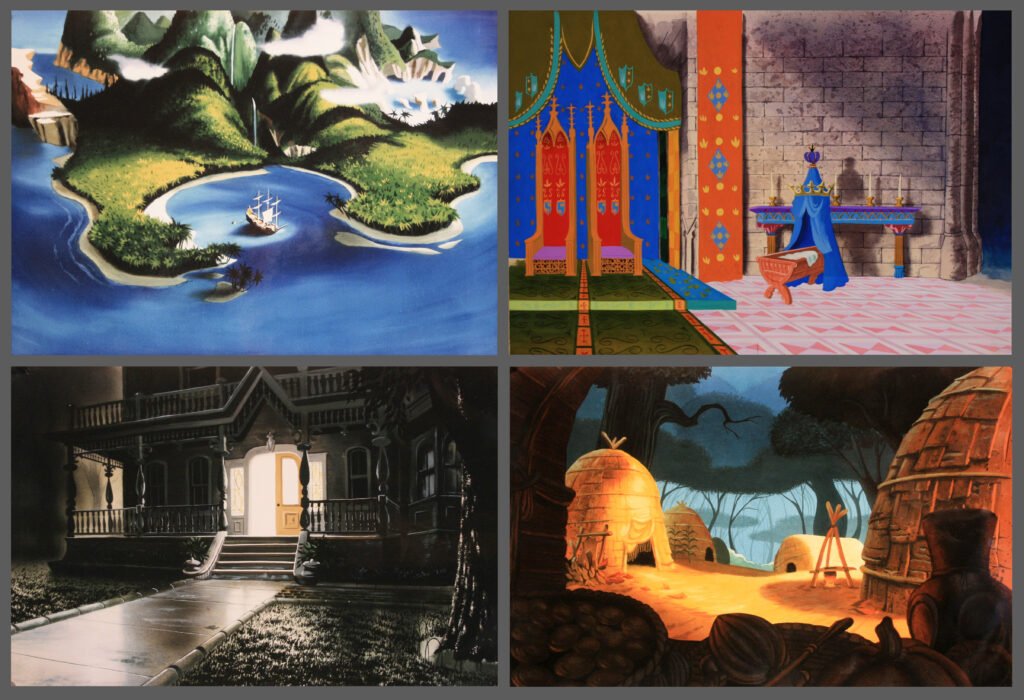
Pave your own way – be bold. From the beginning as a new hire as a Cleanup Artist at Disney Feature Animation in August 1992, I was happy to be employed, but my passions, artistic abilities and training lent themselves to a possible Layout or Background position in environmental film design.
However, there were some doubters and discussions. Yes, I was young, green and inexperienced – not everyone believed in my qualifications. But out of sheer boldness or naïveté, I forged ahead with painting tests (Master Copies from past films) that were required, upon approval, to move over to the Background Department. After 6-7 painting tests from Peter Pan, Sleeping Beauty, Pocahontas and others, I shifted over to the BG Department in April 1993 to begin work on The Lion King as a Trainee.
Take smaller process steps. A metaphor for taking one step at a time: flashlight in a forest.
You’re in a darkened forest at nighttime, looking for a way out. You can barely see your hands in front of you, much less a trail or the surrounding landscape except for a few faint silhouettes of distant trees and bushes. You do, however, have a small flashlight. You point the torch straight out in front of you. But, unfortunately, the trail, distant trees and bushes continue to be imperceptible – the dark forest overpowers the light. But, if you point the flashlight down towards your feet, the path is suddenly clear and readable. You find yourself taking smaller, more manageable steps out of the forest by virtue of the proximity of the light to your feet and the path.
It’s easy to become overwhelmed with the amount of time & energy required as an entrepreneur and wanting to jump ahead. As my mother used to say, “one day at a time,” (not original but still accurate). One thing at a time. Smaller, more manageable process steps is often the key that leads to stronger outcomes.
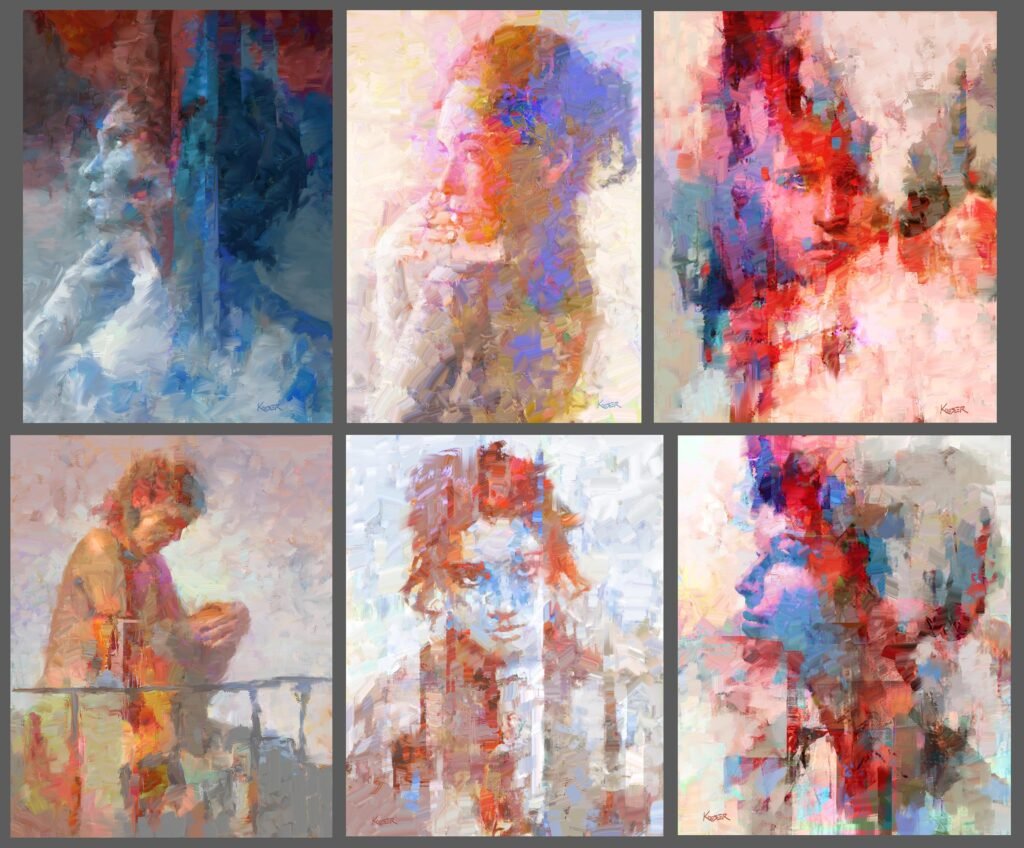
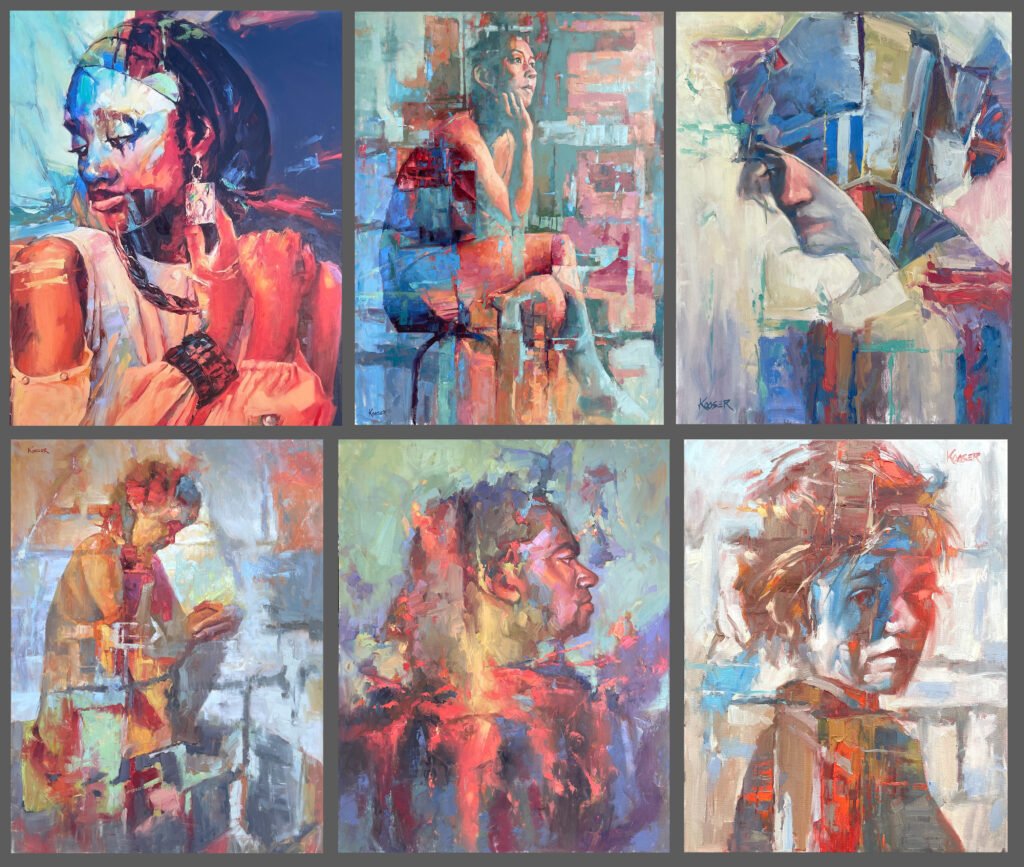
Now many years later as an independent fine artist, I’m repeating history – forging ahead with a bold new artistic direction.
Images below are digital & oil paintings in my new journey.
Listen to your mind and body.
Entrepreneurial energy can be intoxicating and liberating – late nights, endless ideas (usually at 3 a.m.), and constant momentum, but also mental & physical exhaustion can occur. Rest yourself. This isn’t laziness; it’s maintenance. Burnout dulls creativity faster than any lack of inspiration.
The Don’ts:
Romanticize the grind.
Hustle culture has no respect for longevity. Constant exhaustion is not a badge of honor – it’s a warning sign which can lead to health issues. Sustainable success is quieter, steadier, and far less glamorous than social media suggests.
Tie your self-worth to outcomes.
Sales fluctuate. Social media algorithms change – Instagram “likes” come & go. Opportunities fall through and disappointments can be unpleasant. None of these define the value of your work or your self-worth as an artist. Entrepreneurship tests resilience more than talent. Being an artist also means being human.
Abandon your intuition in light of expected realistic outcomes.
Sales matter – but so does instinct. If something feels misaligned, listen. Your gut will tell you if something doesn’t feel right. The most successful artistic entrepreneurs find balance between strategy and soul driven endeavors.
The Good, the Bad and the Ugly
The good:
Entrepreneurialism can be deeply empowering. You gain autonomy, clarity, and ownership over your creative future. You build something that reflects your values – not someone else’s agenda. When alignment clicks, the fulfillment is exciting, profound and satisfying.
The bad:
Self-doubt, imposter syndrome, fear, and financial uncertainty are frequent companions. There are days when you carry the weight of every decision and the vision feels too big – or too fragile to hold. Again, you’re human, you can only do so much. Be kind to yourself.
The ugly
Feeling Isolated can be crippling. Find your community for support- preferably in-person if you can. Join painting groups, teach, grab a coffee with a like-minded creative, go to an art gallery and strike up a conversation with the owner, or simply ask for advice from a respected professional. We are social creatures and communication still matters.
The Physical and Emotional Reality
Entrepreneurship lives in the mind and body: anxiety, headaches, tight shoulders from stress, sleepless nights before launches. Adrenaline-fueled days followed by mental crashes. The emotional labor—uncertainty, risk, vulnerability – is often heavier than the physical work. Writing this blog is therapeutic for me as well…
Yet there is also joy: the quiet pride of creating something from nothing, the confidence that grows each time you trust yourself, the deep satisfaction of choosing your own direction – even when the path is murky. Passion for creation has to be in the forefront, it’s the driving force for everything we do as artists. Love it!
Closing Thoughts
To be an entrepreneur as an independent artist is to walk a line between vision and responsibility, dedication and pragmatism, new and exciting directions.
A new direction doesn’t mean you’re leaving something behind. Often, it means you’re finally allowing your work, and you, to evolve into its fullest form.
And that, in itself, is an act of courage. Embrace it.